26-Week Expository Sermon Notebook

Don’t Just Take Notes. Learn to Listen.

A guided tool for following the preacher’s argument, tracing it back to Scripture and responding faithfully to what God’s Word teaches.

Beyond transcription

Transcription is not the same as comprehension.

  1. 01

    Capturing words

    Recording what was said gives you material to revisit, but it is only the beginning.

  2. 02

    Understanding the sermon

    Follow its structure, identify its main point and see how each part serves the whole.

  3. 03

    Testing and responding

    Return to Scripture, weigh the claims in context and answer the truth with faith and obedience.

Careful hearing

Why careful hearing matters.

Luke 8:18

Jesus’ call to consider how we hear makes attentive reception a serious part of discipleship.

Acts 17:11

The Bereans received the word eagerly and examined the Scriptures to see whether these things were so.

James 1:22–25

Hearing reaches its intended end in faithful doing, not in collecting information alone.

Note-taking does not earn spiritual growth. The notebook simply creates a practical framework for attentive hearing, biblical reflection and faithful response.

The sermon and the text

What makes it expository?

Expository preaching explains the meaning of a Bible passage and builds the sermon around that meaning.

The preacher explains what the text says, shows how its parts support its central claim and presses its purpose upon the hearer.

This notebook assists listening. It does not certify a preacher, guarantee faithful exposition or replace careful reading of Scripture.

Follow the argument

A clear path from the text to faithful response.

  1. 01

    Text

    What passage governs the sermon?

  2. 02

    Proposition

    What central truth does the preacher draw from it?

  3. 03

    Structure

    How do the main points develop that truth?

  4. 04

    Purpose

    What does the text intend to accomplish?

  5. 05

    Response

    What should be believed, repented of, obeyed or prayed?

The governing truth

Finding the proposition.

The proposition is the sermon’s controlling claim: the single truth the preacher is saying about the passage. Writing it clearly helps you distinguish the central argument from supporting explanation, illustration and application.

  • What is the preacher saying about this text?
  • What single truth governs the sermon?
  • How do the main points serve that claim?

The weekly rhythm

Before, during and after the sermon.

01 · Prepare

Read the passage before you listen.

Read the announced passage in its surrounding context. Note the book, passage and any first questions. This prepares you to recognise the text’s movement as the sermon begins.

During the sermon, follow the preacher’s argument rather than trying to transcribe every sentence.


Open YHWH LKR sermon notebook showing fields for the passage, proposition, sermon outline, purpose and big idea

02 · Listen

Look closely at the passage.

Capture the structure, supporting verses, key words and repeated ideas that explain how the sermon reaches its main point.

Mark commands, promises and warnings as they arise from the text, keeping each observation connected to the biblical argument.

Open notebook at the Text Engagement pages for supporting verses, key words, repeated ideas, commands, promises and warnings

03 · Respond

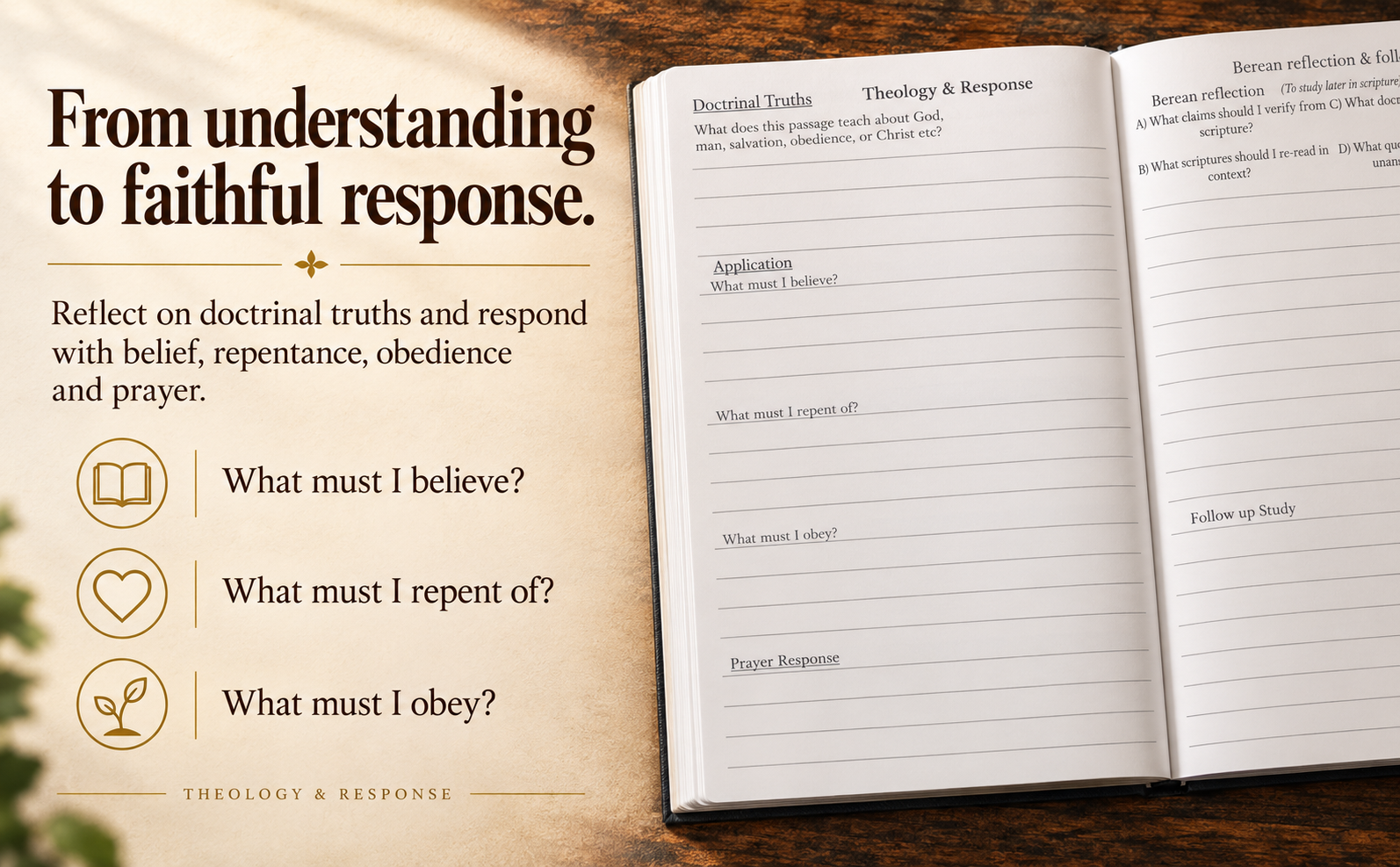
Move from understanding to faithful response.

After the sermon, identify the doctrines made clear by the passage. Then answer personally: What must I believe? What must I repent of? What must I obey?

Turn understanding into prayer, asking God to shape your response by the truth you have heard.

Open notebook at Theology and Response prompts for belief, repentance, obedience and prayer
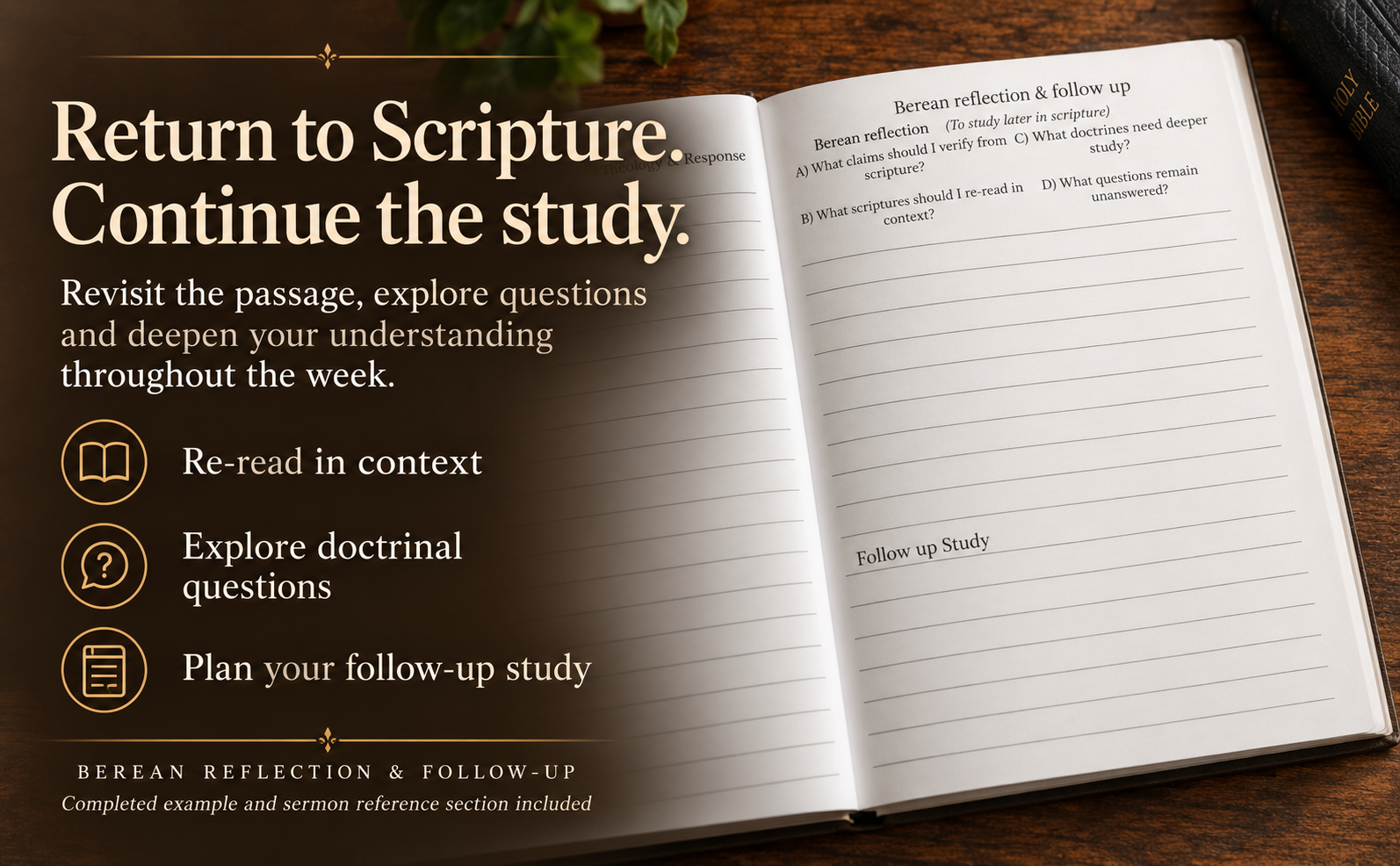
Open notebook showing Berean Reflection and Follow-Up prompts for checking context, recording questions and planning further study

Berean reflection & follow-up

The Berean habit.

Return to the passage after the sermon. Re-read it in context and trace the claims you heard back through Scripture.

Record unanswered questions, explore doctrines that need deeper attention and plan a focused follow-up study.

This is not a posture of suspicion toward faithful preaching. It is the eager, careful habit of receiving the word and continuing to learn from it.

Rightly ordered

A tool, not the goal.

The aim is not fuller notebooks, but hearers who understand, remember and obey God’s Word. These pages serve the sermon and Scripture; they never replace either one.

The origin

Why I made it.

I created this notebook to help listeners move from scattered notes to disciplined listening, biblical verification and faithful response. Every section is designed to keep the passage, the sermon’s argument and the hearer’s response connected.

26 weeks of intentional hearing

Listen intentionally. Study biblically. Apply faithfully.

Amazon shows current pricing and availability.